In the mining sector, complex operations often take place far from public view, deep underground, across remote open pits, or inside highly specialized processing facilities. Because these environments are difficult to access, explain, and promote, animation services for mining have become an essential tool for industrial communication. Through technical 3D animation, motion graphics, and cinematic visualization, mining companies can present equipment, workflows, safety procedures, and project value with clarity and impact.
TLDR: Animation services help mining companies explain complex industrial processes, improve safety training, and market projects more effectively. They turn hard-to-access environments, such as underground tunnels, processing plants, and heavy equipment systems, into clear visual stories. These animations support investor presentations, employee education, regulatory communication, and sales campaigns. When created with technical accuracy and strong visual design, mining animation becomes both a practical operational tool and a persuasive marketing asset.
Why Mining Companies Use Animation
Mining operations involve a combination of geology, engineering, logistics, machinery, and environmental management. Explaining these elements through traditional photographs, diagrams, or written documents can be limiting. A single mining project may include exploration drilling, blasting, ore haulage, crushing, grinding, flotation, tailings management, and rehabilitation planning. Each step is technical, interconnected, and often invisible to outsiders.
Industrial animation solves this communication challenge by making hidden processes visible. It can show how ore moves from the pit to the processing plant, how ventilation works underground, how autonomous haul trucks navigate a site, or how a new conveyor system improves efficiency. Instead of asking audiences to imagine the process, animation allows them to see it unfold in a controlled, simplified, and visually engaging way.
This is especially valuable when a mine is still in the planning or construction phase. Before infrastructure exists, animation can visualize the future site, show phased development, and demonstrate expected production flow. For stakeholders, this creates confidence. For project teams, it creates alignment. For marketing teams, it creates compelling content that can be used across presentations, websites, trade shows, and investor communications.
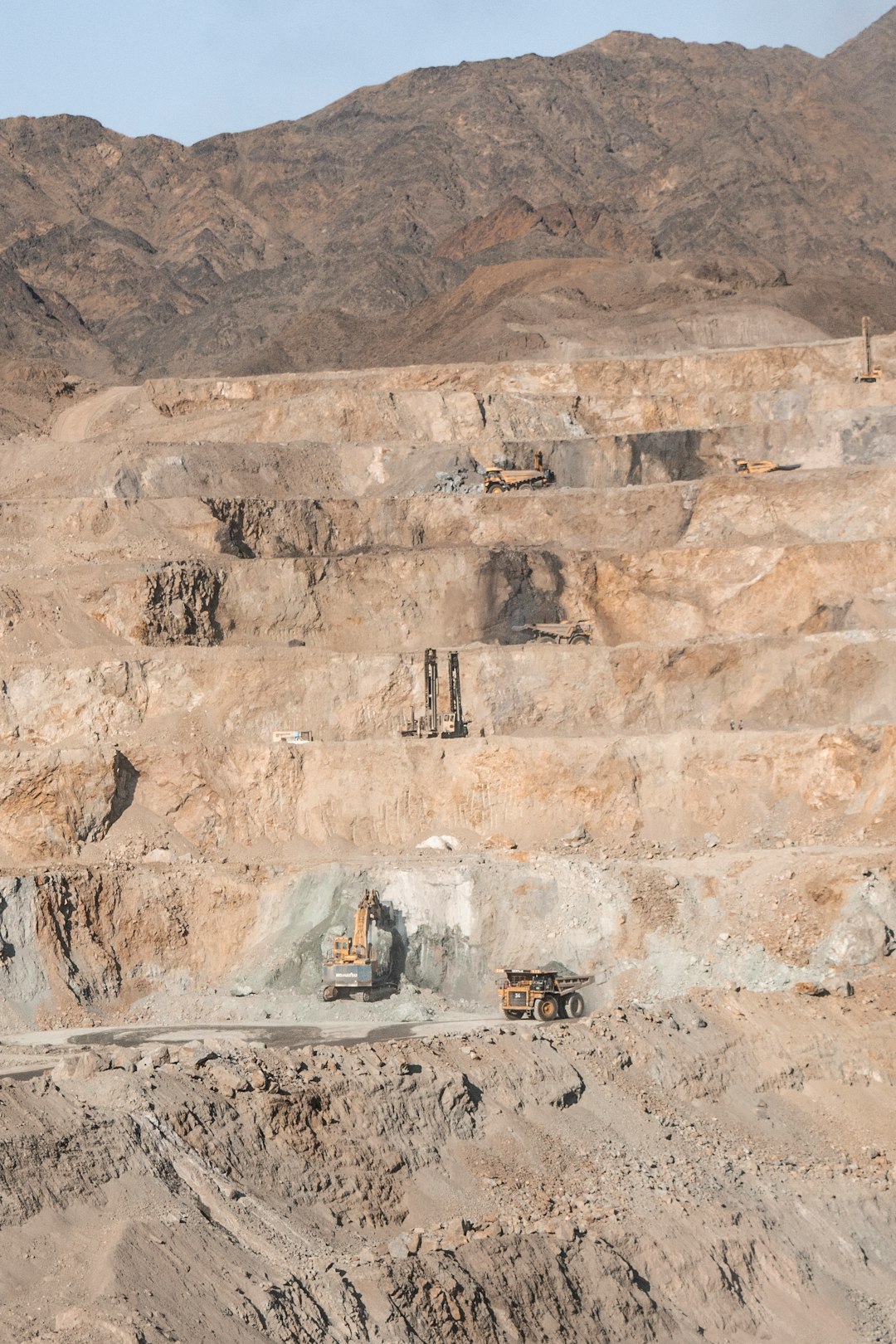
Industrial Visualization for Complex Mining Systems
One of the primary uses of animation in mining is industrial visualization. This refers to the accurate visual representation of equipment, facilities, systems, and workflows. Unlike general promotional videos, industrial visualization focuses on technical clarity. It helps viewers understand how something works, why it matters, and how it fits into the larger operation.
For example, a mining animation might show the internal mechanics of a cone crusher, the separation process inside a flotation cell, or the route of slurry through a pipeline. These subjects are difficult to film effectively because they involve enclosed machinery, hazardous areas, or microscopic material behavior. Animation can cut through equipment, zoom into particles, slow down motion, and highlight key components with labels and color coding.
Common types of mining industrial visualization include:
- Process animations: Showing crushing, grinding, screening, flotation, leaching, refining, or tailings handling.
- Equipment animations: Demonstrating the operation of drills, loaders, trucks, conveyors, crushers, pumps, and mills.
- Site layout visualizations: Presenting open pits, underground networks, processing plants, roads, storage areas, and utilities.
- Construction sequencing: Showing how a plant, mine, or infrastructure system will be built in phases.
- Operational simulations: Visualizing production flow, bottlenecks, maintenance access, and material movement.
These animations can be used internally by engineers and managers, but they are also effective for non-technical audiences. When a government agency, investor group, community panel, or board of directors needs to understand a project quickly, animation can reduce confusion and support better decision-making.
Marketing Value in the Mining Industry
Mining marketing is often challenging because the products and operations are industrial rather than consumer-facing. A mining company may need to promote a mineral asset, a processing technology, an equipment solution, or an engineering service. The audience may include investors, joint venture partners, procurement teams, regulators, local communities, or potential clients. Each group needs a different level of detail, but all benefit from clear visual storytelling.
Mining animation for marketing transforms technical information into persuasive content. It can highlight the scale of a resource, the efficiency of a new system, the safety benefits of a procedure, or the sustainability features of a project. Instead of relying only on charts and technical reports, companies can use animated videos to create emotional engagement while still maintaining accuracy.
Marketing animations are commonly used for:
- Investor presentations that explain project potential, production stages, and infrastructure plans.
- Trade show displays that attract attention and communicate value in a busy environment.
- Website videos that introduce mining services, technologies, or project capabilities.
- Sales presentations for mining equipment, software, automation systems, or engineering solutions.
- Community engagement materials that explain environmental controls, safety measures, and rehabilitation plans.
Because animations are digital assets, they can be repurposed across multiple channels. A full-length project animation can be shortened into social media clips, embedded in a pitch deck, displayed on a booth screen, or adapted into training modules. This makes animation a flexible investment that supports both communication and brand positioning.
Safety Training and Workforce Education
Safety is one of the most important concerns in mining, and animation plays a powerful role in training. Many mining hazards are difficult or dangerous to demonstrate in real life. Underground collapses, machinery entanglement, blasting accidents, confined space risks, and toxic exposure scenarios cannot be recreated safely for training purposes. Animation allows these situations to be shown without putting anyone at risk.
A well-designed safety animation can demonstrate the consequences of unsafe behavior, the correct use of personal protective equipment, or the proper sequence for lockout and tagout procedures. It can also show invisible hazards, such as gas accumulation, dust movement, electrical current, or pressure buildup. These visual explanations are often easier to remember than written instructions alone.
For multinational mining companies, animations can also overcome language barriers. By using clear visuals, icons, simplified narration, and subtitles, the same training material can be adapted for different regions and teams. This helps standardize safety practices across multiple sites.

Animation for Equipment Manufacturers and Mining Technology Providers
Animation services are not only useful for mine operators. They are also valuable for companies that manufacture equipment, develop mining software, provide automation systems, or deliver engineering services. These businesses often need to explain why their product is better, faster, safer, or more cost-effective than alternatives.
For equipment manufacturers, a 3D animation can show internal components, maintenance access, wear parts, hydraulic systems, and performance advantages. It can compare old and new designs, highlight energy savings, or demonstrate installation steps. For software companies, animation can show how data moves from sensors to dashboards, how predictive maintenance works, or how fleet management systems optimize truck routes.
In a competitive industrial market, this kind of visualization can make a product easier to understand and more memorable. Buyers do not always have time to read lengthy specification sheets. A concise animated explanation can help technical and commercial decision-makers grasp value quickly.
Key Elements of Effective Mining Animation
Successful mining animation requires more than attractive visuals. It must balance technical precision, storytelling, and audience needs. A highly cinematic video may look impressive, but if it misrepresents the process, it can damage credibility. On the other hand, a technically accurate animation may fail if it is too dense or visually confusing.
Effective mining animations usually include:
- Accurate 3D models: Equipment, terrain, facilities, and systems should be based on real references such as CAD files, engineering drawings, survey data, or site photos.
- Clear visual hierarchy: Important components should stand out through color, motion, camera focus, or labels.
- Purposeful storytelling: The animation should follow a logical sequence, such as problem, solution, process, and outcome.
- Appropriate level of detail: Technical audiences may need specifications, while public audiences may need simplified explanations.
- Professional narration and sound: Voiceover, music, and sound design can improve comprehension and engagement.
- Brand consistency: Colors, typography, logos, and tone should align with the company’s identity.
The best results are usually achieved when animators work closely with engineers, geologists, safety managers, marketing teams, and project leaders. This collaboration ensures that the final animation is both visually compelling and technically reliable.
Common Styles Used in Mining Animation
Different communication goals require different animation styles. A project finance presentation may need a polished cinematic look, while an internal maintenance guide may require a straightforward instructional style. Mining companies often use a combination of styles depending on the audience and platform.
3D technical animation is the most common style for mining because it can accurately show equipment, sites, and processes. Motion graphics are useful for explaining statistics, production figures, timelines, and environmental targets. Cutaway animation reveals internal mechanisms or underground structures. Exploded view animation separates components to show how machinery is assembled or maintained. Photorealistic rendering is often used for marketing, project proposals, and public presentations where visual impact is important.
In some cases, animation is combined with drone footage, live-action video, LiDAR scans, or interactive 3D models. This hybrid approach can create a strong connection between real-world conditions and future development plans.
Supporting Sustainability and Community Communication
Modern mining companies are expected to communicate clearly about environmental and social responsibility. Animation can help explain water recycling, dust suppression, land rehabilitation, tailings storage, biodiversity protection, and renewable energy integration. These topics can be complex and sensitive, so clear visualization is essential.
For community engagement, animation can show how a project will affect the landscape over time, what mitigation measures will be used, and how land may be restored after mining. It can present traffic routes, noise controls, buffer zones, and environmental monitoring systems in a way that is easier to understand than technical reports alone.
This does not replace transparent data or formal consultation, but it can make communication more accessible. When communities can see how systems are designed to reduce impact, discussions can become more informed and productive.
Choosing an Animation Partner for Mining Projects
When selecting an animation provider, mining companies should look for a team with experience in industrial subjects. The provider does not need to be a mining engineer, but it should understand how to interpret technical documents, ask the right questions, and communicate complex systems accurately.
Important selection criteria include:
- Portfolio relevance: Previous work in mining, energy, construction, manufacturing, or heavy industry.
- Technical workflow: Ability to use CAD files, site plans, equipment drawings, and engineering references.
- Script development: Skill in turning technical information into a clear narrative.
- Review process: Structured checkpoints for accuracy, including storyboards, animatics, draft renders, and final revisions.
- Output flexibility: Delivery in formats suitable for presentations, websites, trade shows, training platforms, and social media.
Working with the right partner can reduce revision time, improve accuracy, and ensure that the animation meets business goals. A strong animation provider will not simply make objects move; it will help the company communicate value.
The Future of Mining Visualization
As mining becomes more automated, data-driven, and environmentally accountable, visualization will become even more important. Animation is increasingly being connected with virtual reality, augmented reality, digital twins, and real-time simulation. These technologies allow users to explore mine sites, inspect equipment, or practice procedures in immersive environments.
For marketing and investor relations, interactive visualization may allow stakeholders to explore a project from multiple angles. For training, virtual environments may allow workers to rehearse emergency procedures before entering hazardous areas. For operations, animated digital twins may help teams monitor performance and plan maintenance more effectively.
Although the technology continues to evolve, the core value remains the same: mining animation helps people understand complex industrial realities. It turns data, engineering, and strategy into visual experiences that are easier to explain, remember, and act upon.
Conclusion
Animation services for mining provide a bridge between technical complexity and human understanding. They help companies visualize operations, market projects, train workers, explain safety procedures, and communicate with stakeholders. Whether used to demonstrate a processing plant, promote a new equipment system, or explain environmental safeguards, animation creates clarity where traditional communication may fall short.
In an industry defined by scale, risk, investment, and innovation, effective visualization is not merely decorative. It is a strategic communication tool. When mining companies use animation thoughtfully, they can improve trust, accelerate understanding, and present their industrial capabilities with confidence.
FAQ
What are animation services for mining?
Animation services for mining involve creating visual content that explains mining operations, equipment, processes, safety procedures, and project plans. These services often include 3D animation, motion graphics, technical visualization, and marketing videos.
How is mining animation used in marketing?
Mining animation is used in investor presentations, trade shows, websites, sales campaigns, and community engagement materials. It helps companies present complex projects or technologies in a clear and visually appealing way.
Can animation improve mining safety training?
Yes. Animation can show hazardous scenarios, correct procedures, equipment risks, and emergency responses without exposing workers to danger. It is especially useful for demonstrating situations that cannot be safely filmed or recreated.
What information is needed to create a mining animation?
Typical inputs include CAD files, site plans, engineering drawings, process diagrams, equipment specifications, photos, drone footage, scripts, and brand guidelines. The exact requirements depend on the animation’s purpose and level of detail.
Is 3D animation better than live-action video for mining?
Neither is always better; each has a different purpose. Live-action video is useful for showing real people and real sites, while 3D animation is better for explaining hidden processes, future projects, internal equipment mechanisms, and hazardous scenarios.
How long should a mining animation be?
Marketing animations are often between one and three minutes, while training or technical animations may be longer. The ideal length depends on the audience, platform, and complexity of the subject.
Who can benefit from mining animation?
Mine operators, equipment manufacturers, engineering firms, technology providers, investors, safety teams, regulators, and local communities can all benefit from mining animation. It is useful wherever complex mining information needs to be communicated clearly.