Large software projects place unusual pressure on quality assurance teams. Multiple squads, complex integrations, shifting requirements, regulatory expectations, and frequent releases can quickly turn test assets into a source of confusion rather than confidence. Test case management is the discipline that keeps testing organized, traceable, measurable, and repeatable across the entire project lifecycle.
TLDR: For large projects, effective test case management requires clear structure, strong ownership, reliable traceability, and disciplined maintenance. Teams should standardize how test cases are written, reviewed, prioritized, automated, and retired. The best results come from treating test cases as living assets that support risk management, release decisions, and long-term product quality.
Establish a Clear Test Case Management Strategy
Large projects should not rely on informal testing habits or scattered spreadsheets. A serious test case management approach begins with a documented strategy that explains what will be tested, how it will be tested, who owns each area, and how results will be reported. This strategy should align with the project’s delivery model, whether the organization follows Agile, DevOps, hybrid delivery, or a more traditional phased approach.
The strategy should define the scope of testing at each level, including unit, integration, system, regression, performance, security, accessibility, and user acceptance testing. It should also clarify the relationship between test cases and business requirements. Without this alignment, large teams often create duplicate tests, miss critical scenarios, or spend excessive time validating low-risk functionality.
A strong strategy turns test case management from an administrative task into a decision-making framework. It helps project leaders understand the quality status of the product and gives testers a shared operating model.
Use a Consistent Test Case Structure
Consistency is essential when hundreds or thousands of test cases are created by different people across multiple teams. Every test case should follow a standard format so that it can be understood, executed, reviewed, and maintained by anyone with appropriate domain knowledge.
A practical test case template should include:
- Test case ID: A unique identifier that supports tracking and reporting.
- Title: A concise description of the scenario being tested.
- Requirement or user story reference: A link to the source of expected behavior.
- Preconditions: Required system state, data, permissions, or configurations.
- Test steps: Clear instructions written in a logical sequence.
- Expected results: Specific outcomes that determine pass or fail status.
- Priority and risk level: Indicators that support release planning.
- Test type: Functional, regression, integration, security, performance, or another category.
- Owner: The person or team responsible for the test case.
- Status: Draft, ready for review, approved, active, deprecated, or obsolete.
Well-structured test cases reduce ambiguity and improve execution speed. They also make it easier to onboard new team members, transfer ownership, and audit testing activities later in the project.
Maintain Traceability from Requirements to Defects
Traceability is one of the most important best practices for large projects. Every critical requirement should be linked to relevant test cases, and every failed test should be connected to a defect or risk record. This creates a clear chain from business need to validation outcome.
Traceability helps answer important questions:
- Which requirements have not yet been tested?
- Which high-risk features have failing tests?
- What business capability is affected by a specific defect?
- Are release candidates sufficiently covered by regression testing?
- Which tests must be rerun after a requirement changes?
In large projects, traceability is not merely a compliance exercise. It is a practical tool for impact analysis. When requirements change, the team can quickly identify affected tests and avoid unnecessary retesting. When defects are discovered late, leaders can determine whether the failure is isolated or connected to a broader quality concern.
Prioritize Test Cases Based on Risk and Business Impact
Not all test cases carry equal value. Large projects rarely have unlimited time to execute every possible scenario before each release. For that reason, teams should prioritize test cases using a combination of business impact, technical risk, usage frequency, regulatory importance, and defect history.
High-priority test cases usually cover critical business processes, revenue-generating functions, security-sensitive operations, core integrations, and areas with frequent production issues. Lower-priority test cases may cover rarely used features, cosmetic behavior, or scenarios that have remained stable for many releases.
A practical prioritization model may classify tests as:
- Critical: Must pass before release; failure blocks deployment.
- High: Strongly recommended for every major release or sprint regression cycle.
- Medium: Executed based on change impact and available time.
- Low: Executed periodically or when related functionality changes.
This approach supports better release decisions. It also prevents teams from spending too much effort on low-value testing while missing scenarios that could seriously affect customers or operations.
Organize Test Suites Around Product and Delivery Needs
In large projects, test cases should be grouped into suites that reflect how the product is built, used, and released. Poor organization can make it difficult to find relevant tests, assemble regression packs, or understand coverage.
Useful ways to organize test suites include:
- By feature or module: Suitable for ownership and maintenance.
- By business process: Useful for end-to-end validation.
- By release or sprint: Helpful for tracking delivery-specific scope.
- By test level: Such as integration, system, regression, or acceptance testing.
- By platform: Relevant for web, mobile, desktop, API, or embedded systems.
- By risk category: Suitable for compliance, security, and operational resilience.
The best structure often combines several of these dimensions. For example, a project may organize primary ownership by product module while also maintaining special regression suites for release readiness. The goal is to make test assets easy to locate and meaningful to stakeholders.

Define Ownership and Review Responsibilities
Large test repositories become unreliable when ownership is unclear. Each set of test cases should have a responsible owner, whether that is an individual tester, QA lead, product team, automation engineer, or business analyst. Ownership does not mean one person must execute every test. It means someone is accountable for accuracy, relevance, and maintenance.
Formal review practices are equally important. Before a test case becomes active, it should be reviewed for clarity, correctness, coverage, and alignment with requirements. Reviews should include QA professionals and, where appropriate, product owners, developers, security specialists, compliance teams, or business users.
A test case review should confirm that:
- The scenario is valid and necessary.
- The steps are clear and executable.
- The expected result is measurable.
- The test data is available or can be created.
- The test is not a duplicate of an existing case.
- The priority reflects actual risk.
This discipline protects the integrity of the test repository. It also reduces misunderstandings between QA, development, and business stakeholders.
Keep Test Cases Maintainable
One of the common failures in large projects is allowing test repositories to grow without control. Over time, products change, requirements are rewritten, workflows are redesigned, and some tests become inaccurate or redundant. If test cases are not maintained, execution becomes slower and results become less trustworthy.
Teams should schedule regular test case maintenance activities. These may take place at the end of each sprint, after each major release, or during dedicated quality improvement cycles. Maintenance should include updating steps, revising expected results, removing obsolete tests, merging duplicates, and reclassifying priorities.
Obsolete tests are not harmless. They waste execution time, create false failures, and undermine confidence in reporting. A smaller, accurate set of test cases is usually more valuable than a large repository filled with outdated material.
Balance Manual and Automated Testing
Automation is essential for large projects, but it should be applied selectively. The purpose of automation is not to automate every test case; it is to increase speed, repeatability, and confidence where automation delivers clear value.
Good candidates for automation include:
- Stable regression tests executed frequently.
- High-risk business workflows.
- Data-driven scenarios with many input combinations.
- API and integration tests requiring precise validation.
- Smoke tests used to verify build readiness.
Manual testing remains important for exploratory testing, usability evaluation, complex business judgment, early feature validation, and scenarios where the user experience matters more than mechanical output. A mature test case management practice distinguishes between manual and automated coverage and reports both clearly.
Automation status should be tracked directly in the test management system. Teams should know which test cases are automated, which are planned for automation, which are unsuitable, and which automated tests are unstable. This prevents unrealistic assumptions about coverage.
Manage Test Data Carefully
Large projects often fail not because test cases are poorly written, but because test data is unreliable. Complex systems may require specific customer profiles, account states, permissions, transaction histories, or integration responses. If this data is not managed properly, test execution becomes inconsistent and defects become difficult to reproduce.
Test case management should include a clear approach to test data. Teams should document required data, protect sensitive information, refresh environments regularly, and avoid dependency on fragile records that may be changed by other testers. Where possible, test data should be created through controlled scripts or service calls.
For regulated environments, test data management must also address privacy and security. Production data should not be used casually in test environments. If production-like data is required, it should be masked, anonymized, or generated synthetically according to organizational policy.
Integrate Test Management with Development Workflow
Test case management becomes more effective when it is connected to the broader delivery ecosystem. Test cases should be linked to requirements, user stories, builds, defects, code changes, and release records. Integration with issue trackers, CI/CD pipelines, automation frameworks, and reporting tools reduces manual effort and improves visibility.
For example, when an automated regression suite runs in a pipeline, the results should be visible to QA leads and release managers. When a defect is raised from a failed test, the defect should contain enough context for developers to investigate efficiently. When a user story is marked complete, associated acceptance tests should be reviewed and executed.
This integrated workflow creates a shared source of truth. It prevents quality information from being trapped in separate systems or private team documents.
Use Meaningful Metrics and Reporting
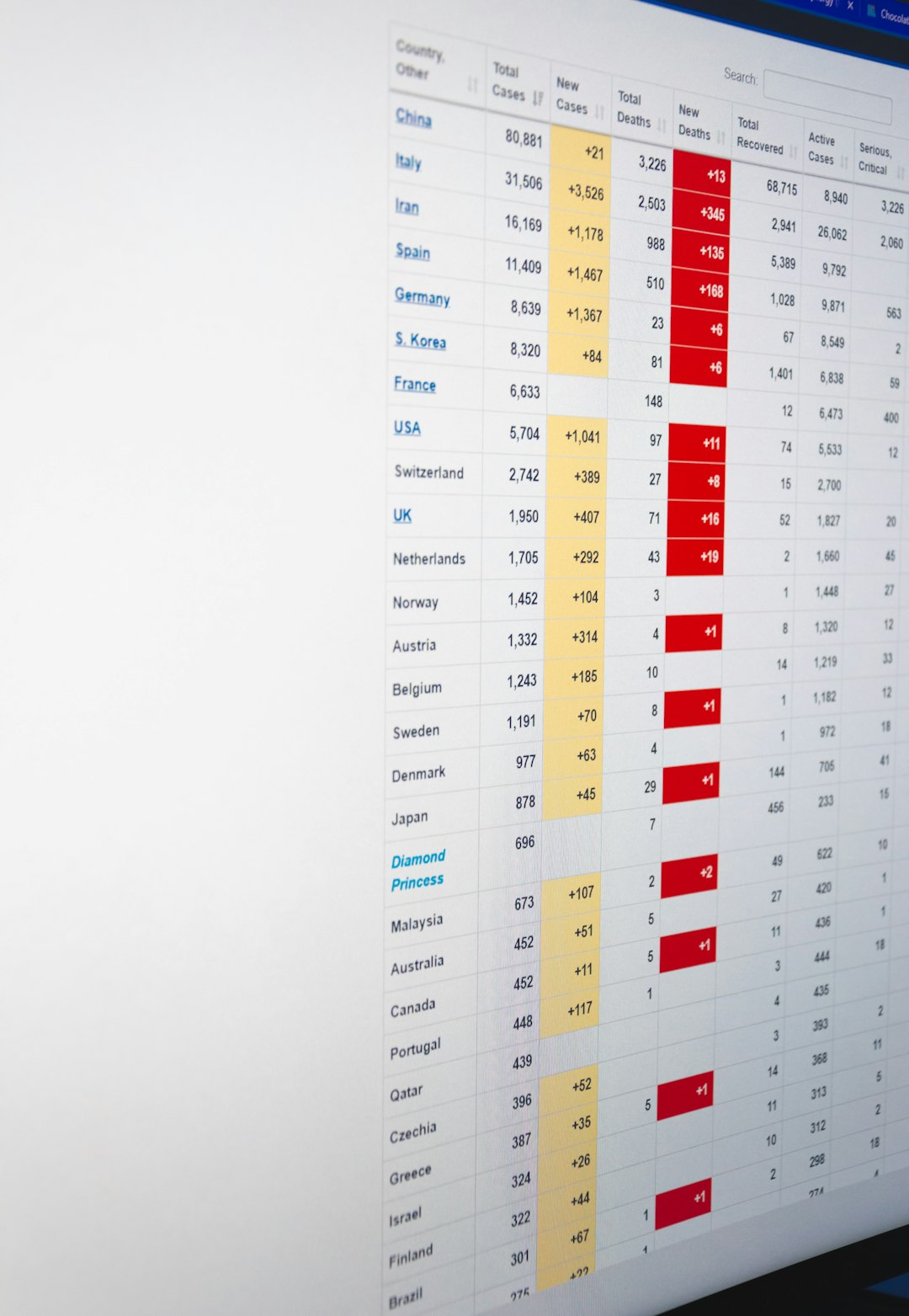
Large projects need reliable metrics, but not all metrics are useful. Counting the total number of test cases may show activity, but it does not necessarily show quality. Reporting should focus on indicators that help stakeholders make informed decisions.
Useful test management metrics include:
- Requirement coverage: Percentage of requirements linked to test cases.
- Execution progress: Planned versus completed test runs.
- Pass and fail rates: Results by priority, feature, and release.
- Defect density: Defects by module, severity, and source.
- Regression stability: Frequency of regression failures over time.
- Automation coverage: Automated tests compared with the total relevant regression scope.
- Blocked tests: Tests that cannot be executed due to environment, data, or dependency issues.
Reports should be concise, honest, and actionable. A serious report does not hide risk behind attractive charts. It explains where confidence is high, where uncertainty remains, and what decisions are required.
Control Changes to the Test Repository
As large projects evolve, test cases change frequently. Without change control, the repository can become unstable. Teams should define who can create, modify, approve, archive, or delete test cases. This does not require excessive bureaucracy, but it does require discipline.
Version history is valuable because it allows teams to understand why a test changed and when. For critical systems, especially in healthcare, finance, aviation, or government environments, test case versioning may be necessary for audit and compliance purposes.
Change control should be practical. Minor wording improvements may require lightweight review, while changes to critical release-blocking tests may require approval from QA leadership or product ownership.
Encourage Collaboration Across Roles
Test case management is not only a QA responsibility. Developers, business analysts, product owners, UX specialists, operations teams, and compliance stakeholders all contribute to effective testing. Large projects benefit when test cases are discussed early rather than created after development is complete.
Collaborative test design improves coverage because each role sees different risks. Developers understand technical failure points. Product owners understand expected business behavior. Operations teams understand deployment and monitoring concerns. QA professionals bring structure, skepticism, and evaluation skill.
Practices such as backlog refinement, three amigos sessions, requirement walkthroughs, and defect triage meetings help maintain alignment. The earlier a testable expectation is clarified, the less expensive it is to correct misunderstandings.
Plan Regression Testing as a Strategic Activity
Regression testing is often the largest and most expensive testing activity in major projects. Without careful management, regression suites become bloated, slow, and difficult to interpret. Teams should design regression testing around risk and change impact rather than simply rerunning everything.
A mature regression strategy includes a small smoke suite, a critical business suite, feature-specific regression packs, integration regression tests, and periodic full regression cycles. Automated tests should support fast feedback, while manual regression should focus on areas where human judgment is valuable.
Regression suites should be reviewed after every major release. Tests that no longer provide meaningful confidence should be removed or rewritten. New production defects should be analyzed to determine whether additional regression coverage is needed.
Conclusion
Test case management for large projects requires structure, ownership, and continuous attention. It is not enough to create test cases at the beginning of a project and execute them mechanically. Test cases must remain aligned with requirements, risks, architecture, releases, and business priorities.
The most effective teams treat their test repository as a strategic quality asset. They write clear test cases, maintain traceability, prioritize by risk, manage test data, integrate with delivery workflows, and report results honestly. With these practices in place, large projects gain more than organized documentation; they gain a dependable foundation for making confident release decisions.