Greek mythology has influenced Western language, literature, architecture, psychology, and commerce for centuries. For modern companies, names inspired by Greek gods can communicate qualities such as strength, wisdom, speed, beauty, protection, or technical mastery. When used responsibly, these names offer more than decoration: they can help a brand create a memorable identity rooted in symbols that many audiences already understand.
TLDR: Companies named after Greek gods often use mythology to signal a clear brand promise, such as speed, intelligence, power, creativity, or trust. Well-known examples include Nike, Apollo, Hermes, and brands inspired by Athena, Atlas, and Oracle-like mythic authority. The best mythological names work when they align with the company’s product, values, and customer expectations. A Greek god name should feel relevant, credible, and distinctive rather than merely dramatic.
Why Greek Gods Still Matter in Branding
Brand naming is not only a linguistic exercise; it is a strategic decision. A company name must be memorable, legally usable, easy to pronounce, and capable of carrying meaning over time. Greek gods and mythological figures offer a rich source of naming inspiration because they are associated with enduring ideas: Athena with wisdom and strategy, Hermes with speed and communication, Poseidon with the sea and force, Apollo with light, knowledge, music, and exploration, and Nike with victory.
These associations can help companies communicate quickly. A logistics firm named after Hermes, for example, can immediately suggest movement and delivery. A cybersecurity company inspired by Athena may suggest intelligence, defense, and strategic protection. A marine engineering brand using Poseidon may signal command of the ocean environment. The mythological reference becomes a kind of shorthand for positioning.

What Makes a Greek God Name Effective?
Not every mythological name is automatically a good brand name. The strongest examples typically meet several criteria:
- Relevance: The god or mythological figure should connect naturally to the company’s industry or value proposition.
- Clarity: The association should be understandable without requiring obscure scholarly knowledge.
- Memorability: The name should be easy to recall, say, and search for.
- Credibility: The mythic reference should support a serious brand identity rather than feel exaggerated.
- Adaptability: The name should work across product lines, markets, and future business growth.
- Legal availability: Trademark checks and domain availability are essential before adoption.
A good mythological name does not simply borrow grandeur. It translates a symbolic meaning into a commercial promise. The customer should be able to understand why the name fits.
Nike: Victory as a Global Brand Promise
One of the most prominent examples is Nike, named after the Greek goddess of victory. The name is short, strong, and directly aligned with athletic achievement. It communicates winning, performance, and ambition in a single word. This is a textbook case of mythological naming because the meaning supports the company’s core industry: sports footwear, apparel, and performance culture.
The success of Nike also illustrates an important branding principle. A powerful name can provide a foundation, but the company must consistently reinforce it through products, design, marketing, endorsements, and customer experience. Nike’s mythological reference works because it is supported by decades of messaging around excellence, competition, and personal achievement.
Apollo: Light, Knowledge, and Exploration
Apollo is another widely used mythological name in business. In Greek mythology, Apollo is associated with light, music, healing, prophecy, reason, and the sun. The name has also been strongly reinforced by the Apollo space program, which added modern associations of science, engineering, courage, and exploration.
Companies using Apollo in their names often operate in fields such as technology, healthcare, finance, education, energy, or aerospace-related services. The appeal is clear: Apollo feels intelligent, elevated, and ambitious. It can suggest illumination, discovery, and forward movement. For companies that want to appear innovative but still serious, Apollo can be a persuasive naming reference.
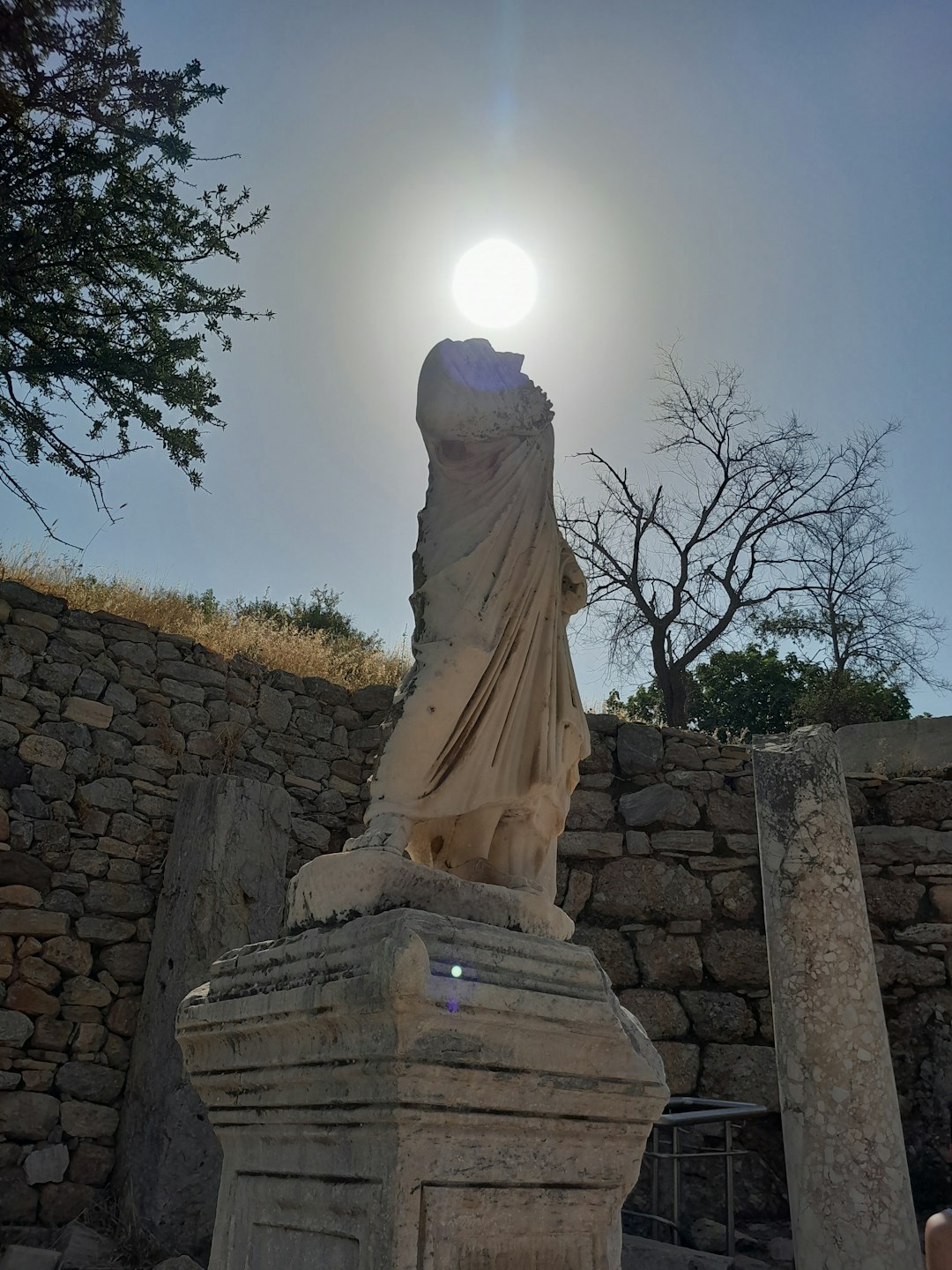
Hermes: Speed, Movement, and Communication
Hermes, messenger of the gods, is closely associated with travel, trade, communication, and swift movement. This makes the name especially attractive for companies in logistics, messaging, courier services, mobility, and commerce. The name can also suit technology businesses focused on communication platforms or data transfer.
The luxury house Hermès, while using the family name of its founder rather than a direct mythological naming strategy, benefits from a powerful linguistic overlap with the mythological Hermes. The association with travel and refined movement fits the brand’s heritage in harnesses, saddlery, leather goods, and elegant craftsmanship. This example shows how mythological resonance can enrich a name even when the origin is historical rather than deliberately symbolic.
Athena: Strategy, Wisdom, and Protection
Athena, goddess of wisdom, strategy, crafts, and defensive warfare, is one of the strongest mythological references for professional services and technology companies. Her image suggests intelligence without passivity, and protection without aggression. This balance makes Athena particularly useful for firms in cybersecurity, consulting, education, legal technology, defense analysis, artificial intelligence, insurance, and healthcare.
A brand using the Athena name can position itself as thoughtful, disciplined, and capable. The danger, however, is overuse. Because Athena is so symbolically attractive, many businesses have adopted it. Companies considering the name should carefully assess whether they can differentiate themselves through a modifier, visual identity, product category, or distinctive brand story.
Atlas: Strength, Endurance, and Global Reach
Although Atlas is a Titan rather than an Olympian god, he is one of the most commercially influential figures from Greek mythology. Atlas is commonly associated with strength, endurance, burden-bearing, maps, and global scale. This makes the name a frequent choice for companies in logistics, construction, fitness, finance, navigation, real estate, and enterprise software.
A company named Atlas can imply that it carries weight, supports customers, or operates at global scale. In business-to-business contexts, the name may suggest reliability and infrastructure. It is especially effective when the company helps clients manage complexity, move goods, organize data, or build durable systems.
Poseidon: Marine Power and Natural Force
Poseidon, god of the sea, earthquakes, and horses, is a more specialized but highly evocative option. It is well suited to companies connected with the ocean, shipping, offshore engineering, marine technology, water sports, fishing equipment, desalination, environmental monitoring, or coastal infrastructure.
The advantage of Poseidon is immediate category relevance when used in marine contexts. The disadvantage is that the name carries a powerful, sometimes volatile image. For a company that wants to communicate stability, safety, and environmental responsibility, Poseidon should be used carefully, supported by calm visual design and clear messaging.
Other Greek Deity Names Used in Business Contexts
Several other Greek gods and goddesses can provide credible naming inspiration, depending on the sector:
- Artemis: Associated with wilderness, independence, the moon, and precision. Suitable for outdoor brands, environmental technology, women’s health, and advanced engineering.
- Hephaestus: God of fire, metalworking, and craftsmanship. Strong for manufacturing, engineering, industrial design, robotics, and maker communities.
- Demeter: Goddess of agriculture and fertility. Appropriate for food, farming, sustainability, soil science, and natural products.
- Ares: God of war. Potentially suitable for gaming, defense, and competitive products, though it can sound aggressive and should be used with caution.
- Aphrodite: Goddess of beauty and love. Relevant for cosmetics, wellness, fashion, and personal care, but may require elegant positioning to avoid cliché.
- Hestia: Goddess of the hearth and home. Useful for home goods, hospitality, real estate, family services, and comfort-focused brands.
- Helios: Associated with the sun. A strong candidate for solar energy, lighting, sustainability, and outdoor technology.
Benefits of Naming a Company After a Greek God
Greek god names can offer several practical branding advantages. First, they are often symbolically rich. A single name can carry centuries of meaning. Second, many are internationally recognizable, particularly in markets influenced by Western education, literature, or art. Third, they can support strong visual identities, from classical motifs to modern minimalist interpretations.
They also allow companies to position themselves with seriousness and ambition. A mythological name can imply that the company is grounded in something larger than short-term trends. This can be useful for businesses that want to appear established, visionary, or values-driven.
Risks and Drawbacks to Consider
There are also risks. Some names may be difficult to spell or pronounce in certain markets. Others may be heavily used, making trademark protection and search visibility harder. A name like Athena or Atlas may be attractive, but it may also require additional distinctiveness to stand out.
There is also the risk of mismatch. A lighthearted consumer app using the name Zeus might feel inflated. A financial advisory firm named Ares might appear unnecessarily aggressive. A beauty brand named Hephaestus might confuse customers unless the concept is carefully explained. The mythological meaning must support the brand’s actual promise.
Companies should also consider cultural sensitivity and accuracy. Greek mythology is a living part of cultural heritage as well as a historical tradition. A serious brand should avoid careless or disrespectful use, especially when incorporating sacred imagery, ancient symbols, or historical art styles.
How to Choose the Right Mythological Name
A disciplined naming process can help avoid mistakes. Companies considering a Greek god name should begin by defining the brand’s core attributes. Is the company trying to communicate speed, knowledge, strength, beauty, protection, craftsmanship, or growth? Once the desired attributes are clear, the mythological reference can be evaluated for fit.
- Define the strategic message. Clarify what the name must communicate to customers, investors, and employees.
- Map relevant deities to brand values. Match gods and figures to specific qualities, not vague grandeur.
- Test pronunciation and recall. A name should work in conversation, search engines, sales calls, and presentations.
- Research competitors. Identify whether the name is already common in the category.
- Check trademarks and domains. Legal review is essential before public use.
- Build a coherent identity. Typography, color, messaging, and imagery should reinforce the mythological meaning without becoming theatrical.
Modern Branding Does Not Require Ancient Styling
A common mistake is assuming that a Greek-inspired name must be paired with columns, laurel wreaths, marble statues, or gold ornamentation. In many industries, especially technology and finance, this can feel outdated. A modern company named after a Greek god can use clean typography, restrained colors, and contemporary design while keeping the symbolic meaning in the background.
For example, a company named Athena does not need a helmet in its logo. It might instead use precise geometry, balanced proportions, and language focused on intelligent protection. A company called Helios does not need a literal sun illustration; it can communicate brightness and renewable energy through color, motion, and product experience.
Conclusion: Mythology Works Best When It Serves Strategy
Companies named after Greek gods can benefit from powerful associations, but the name must do strategic work. The strongest examples connect mythological meaning to a real business promise: Nike and victory, Hermes and movement, Apollo and illumination, Athena and wisdom, Atlas and strength. These names endure because they are more than attractive references; they help customers understand what the brand stands for.
For founders, marketers, and brand strategists, Greek mythology remains a serious source of inspiration. Used thoughtfully, it can produce names that are memorable, meaningful, and visually rich. Used carelessly, it can create confusion or exaggeration. The essential question is simple: does the myth help explain the company’s value in a credible way? If the answer is yes, a Greek god name can become a lasting asset in the brand’s identity.